.png)
Setting the right price in the SaaS industry is one of the highest-leverage decisions you can make, but also one of the most misunderstood. There’s no shortage of buzzwords out there: cost-based, value-based, usage-based, AI pricing, and more. But which one actually works in the real world❓
We created this pricing guidebook to cut through the noise. Instead of vague theory, we aimed to build a practical framework, checklist, and reference that founders and teams can use to make pricing decisions.
To ground it in reality, we reached out to people who’ve been in the trenches: SaaS leaders actively shaping and testing pricing strategies in their companies. We invited:
These experts shared what worked, failed, and surprised them, but also what they would do differently.
What we collected here
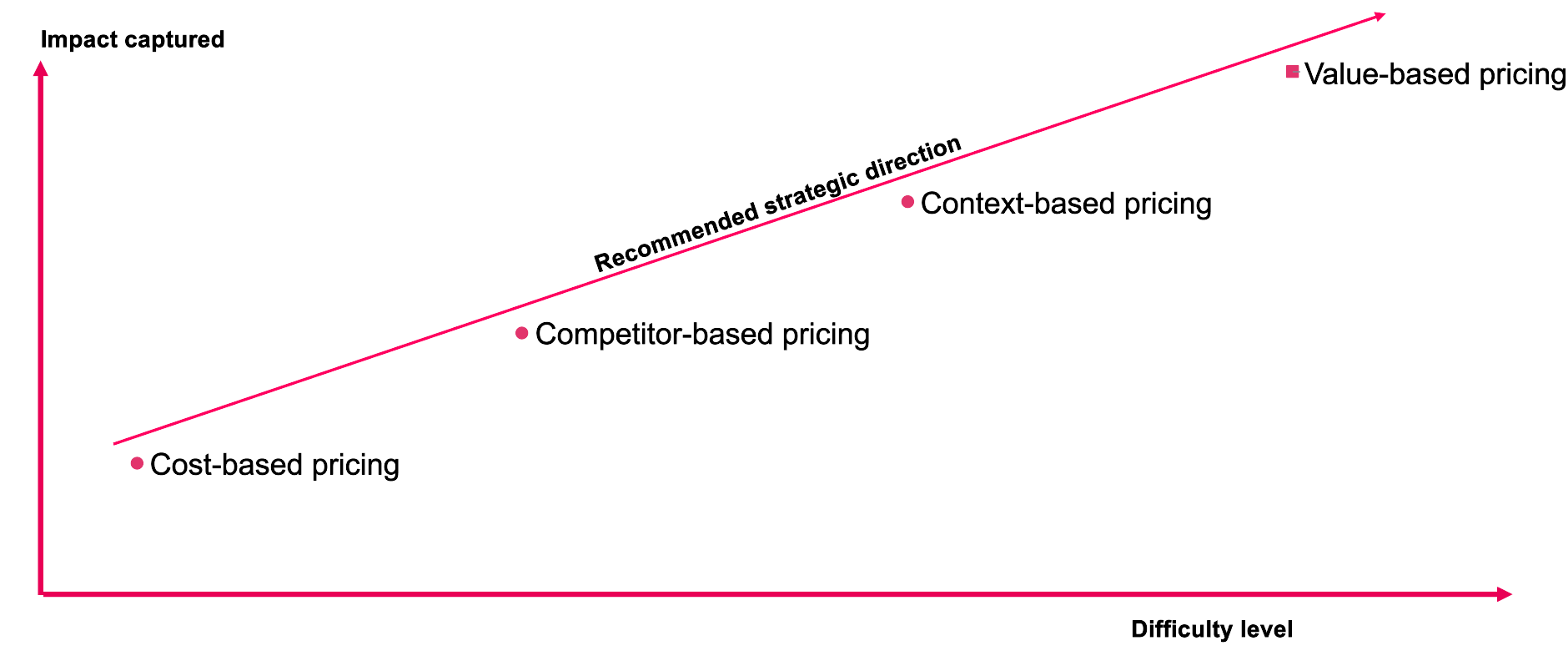
Below, we've gathered concise summaries of the four most common pricing strategies: Cost-Based, Competitor-Based, Context-Based, and Value-Based.
You'll find the main differences, along with their pros and cons, to help you determine which approach might be most beneficial for your business.
Competition-based pricing is a way of positioning your product’s pricing model based on how your competitors do it. You check a dozen similar tools, compare their prices, and develop your pricing strategy accordingly.
Usually, somewhere at the bottom - to compete with the price, but not to be the cheapest. We know that from the interviews we have conducted with founders and CEOs, they’re usually pricing at the lower quartiles of the pricing corridor if they apply the benchmarking strategy.
It doesn’t include just the price. You can copy the number of plans, discount policy, or whether you charge per seat, per feature, or if you charge at all.
SaaS companies love it because it’s easy to do and requires relatively low effort.
And as long as effortless solutions don’t have to be wrong, competitor-based pricing, if done thoughtlessly, may lead to many business risks.
If done correctly, it will be a great source of clutch business insights about your competition and customers. It works well as a benchmarking tool, but in doing so, you essentially delegate your pricing decisions to the market and your competitors.
✅ Advantages
🆘 Disadvantages
Examples using this method: UBER, Walmart
You set prices based on the type of customers you target. There are five main types of market strategies.
Some businesses set higher prices to attract customers with premium expectations, while others lower their prices to reach untapped or price-sensitive segments.
✅ Advantages
🆘 Disadvantages
Examples of companies using this method: Nespresso, Netflix, Dollar Shave Club
The idea of value-based pricing comes down to determining a product's or service's value to customers and how much they are willing to pay for it. To determine the correct number, it’s necessary to consider several factors that influence a product's perceived value, including customer behavior and competition.
The goal is to understand a given product’s place in the market and how it responds to clients’ needs. And with that information, we can estimate the willingness to pay (WTP), the maximum price a client is ready to pay for a product or service. In value-based pricing, estimating WTP is the cherry on top, allowing us to make accurate final decisions.
Without a doubt, value-based pricing is a complex pricing strategy. It requires a lot of research and takes much more time than other strategies, such as cost-plus pricing or competitor-based pricing. It takes much more than calculating all costs or taking a sneak peek at competitors’ websites. It’s thorough, multi-dimensional, and never really stops because all the factors that influence the value of a product constantly change. Without the proper tools or expertise, it can be impossible to implement.
However, this challenging approach can bring significantly more profits for the company. With value-based pricing, we can more accurately determine the maximum price that customers will still be willing to pay.
✅ Advantages
🆘 Disadvantages
Examples of companies using this method: Apple, Salesforce
We created a dedicated playbook focused entirely on AI pricing strategies.
It includes real examples, models, and practical tips to create scalable AI SaaS pricing models:
Key insights include managing usage metrics, cost structures, hybrid revenue models, and ROI measurement, as well as leveraging AI add-ons and accelerating time-to-value for outcome-based pricing.
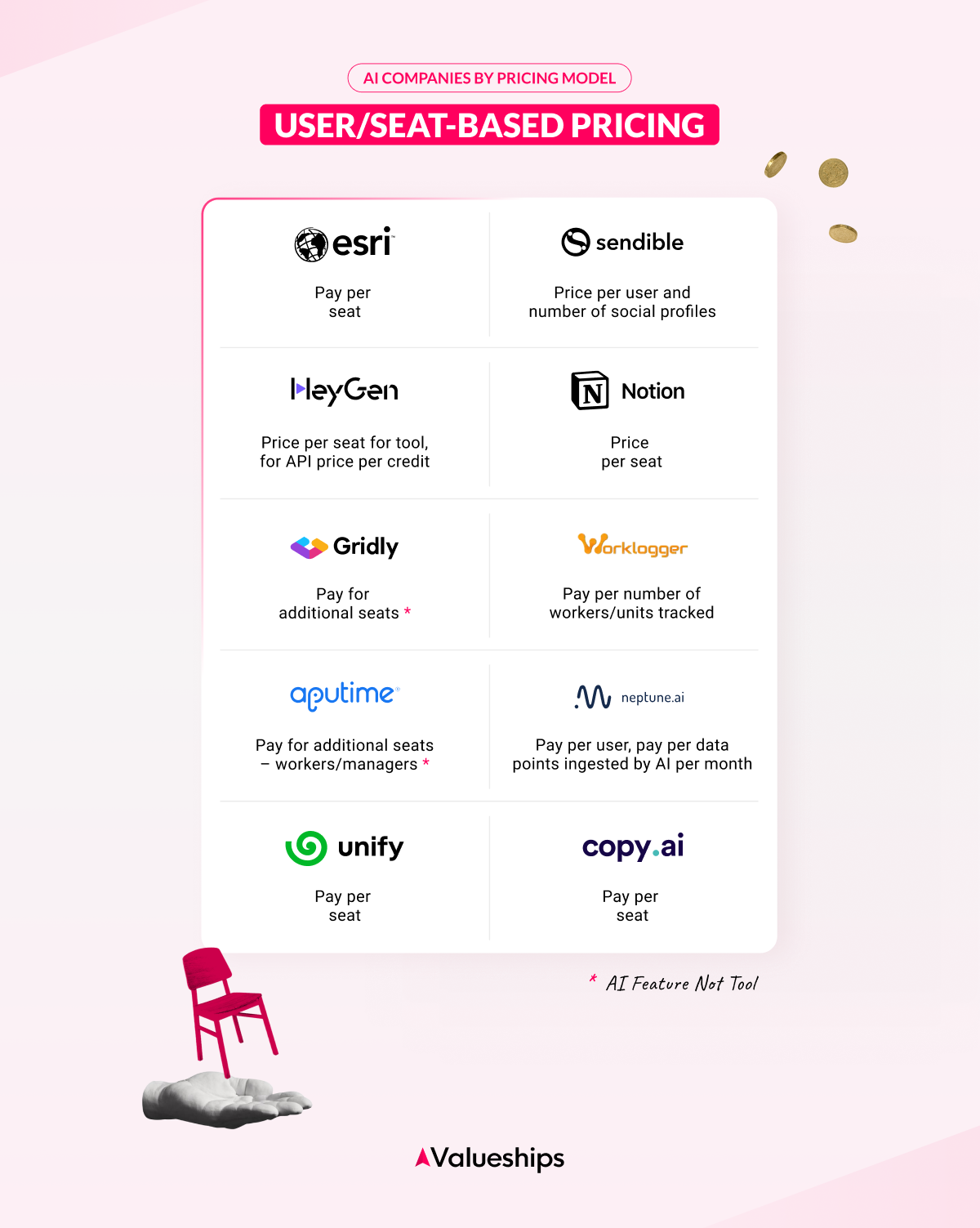
Pricing models include:
.png)
%20(1).png)
%20(1).png)
%20(1).png)
%20(1).png)
If you’d like me to walk you through this or you’d like to learn which model might fit you best -let’s schedule a time.
|
Krzysztof Szyszkiewicz 🗓️ Book a pricing consultation → calendar 🔺 Pricing Expert, Partner & Co-founder at Valueships 📥 krzysztof_szyszkiewicz@valueships.com 👋 https://www.linkedin.com/in/krzysztof-szyszkiewicz/ |
%201.webp)
|
We reached out directly to leading voices in the SaaS space: Vincent Jong, Sara Archer, Paulina Walkowiak, Frank Sondors, Pierre-Baptiste Landoin and Anna Pozniak to uncover the real stories behind how they approached pricing.
▶️ What guided their pricing decisions?
▶️ What challenges did they face as a result?
▶️ What worked and what would they do differently?
The insights we gathered are invaluable, fresh, honest, and deeply relevant for anyone navigating the SaaS world 🔥
Scroll down to explore firsthand experiences and practical takeaways straight from these SaaS experts ⬇️

I like to challenge myself on the core architecture of the model. It's quite interesting to see if your pricing model could be based on an entirely different value driver. What other value drivers could you price on? What would that look like? How would customers react?
Sara Archer
CRO @ ChartMogul

When I have done pricing and packaging changes, we spent a lot of time figuring out WHAT we should price. Often people would come in and buy a specific product first, and we needed to make it easy to buy that so that they would convert and not get lost in the complexity of the platform pricing.
Vincent Jong Buyside M&A Advisor @ Dealfront
Founder @ SaaS On The Beac

Initially, it was simpler when we calculated our costs and analyzed competitor prices to position CUX in the market. While those factors are still important, there's more to consider.
Paulina Walkowiak CEO/co-founder @ cux.io

The much better pricing model, and I highly recommend that for most companies to do, is what is called usage-based or consumption-based pricing. Something we have implemented here at Salesforge. Aligning the value the customer gets from our software with how much we are charging them for that.
V. Frank Sondors CEO @ Forge
Click to watch Frank’s recording

We decided to make our pricing a central element of our differentiation. So we entered the market by being 5 to 10 times cheaper than the competition. We had mapped all competitors, analyzed their pricing, and positioned ourselves…
Pierre-Baptiste Landoin CEO @ Icypeas

Stop anchoring to your competitors’ pricing. Your best pricing insights are hiding in sales calls and churn reason, not on someone else’s pricing page. We’ve learned that how you package features often matters more than what you charge. Grouping by outcomes or use cases converts better than tiering by feature depth.
Anna Pozniak Head of Marketing @ NetHunt CRM
You're not alone. SaaS leaders like Vincent Jong, Sara Archer, Paulina Walkowiak, Frank Sondors, Pierre Baptiste Landoin, and Anna Pozniak have been in your shoes. We've gathered their insights and practical advice, and combined them with battle-tested strategies like cost-based, competitor-based, context-based, and value-based pricing.
Our AI SaaS Pricing Playbook is packed with actionable frameworks, checklists, and real-world examples to guide you through AI pricing strategies.
We're here to help you tackle your pricing challenges and build a strategy that works for your business.
—
Krzysztof Szyszkiewicz
🗓️ Book a pricing consultation → calendar
👋 https://www.linkedin.com/in/krzysztof-szyszkiewicz/

Certified expert in price, revenue and margin management in B2B companies and e-commerce. Member of the prestigious Professional Pricing Society. At Valueships, he is responsible for the implementation of consulting projects and taking care of the profitability of clients. Prior to joining Valueships, he worked at McKinsey & Company in the area of pricing and strategy.
Schedlue a free consultation
Certified expert in price, revenue and margin management in B2B companies and e-commerce. Member of the prestigious Professional Pricing Society. At Valueships, he is responsible for the implementation of consulting projects and taking care of the profitability of clients. Prior to joining Valueships, he worked at McKinsey & Company in the area of pricing and strategy.


%20(1).png)