

A well-executed saas price increase strategy can have a significant impact on a company’s growth and profitability. These strategies are also highly relevant for AI companies, which face similar pricing challenges and require tailored approaches to maximize value.
Kontentino is a social media management platform that helps agencies and brands streamline their content approval process. Its target market consists of marketing teams and agencies looking for efficient collaboration tools. When designing pricing strategies for SaaS and AI companies, it is essential to understand the customer base and customer needs, as these factors play a key role in effective segmentation, revenue modeling, and growth planning.
“We wanted to make sure that our price increase would be well received by our customers and would not negatively impact our churn rate,”
said Bohumil Pokštefl, CEO of Kontentino. A data-driven pricing approach can accelerate revenue by capturing more value from the existing customer base.
We worked closely with Kontentino’s team to analyze their pricing structure, customer segments, and value proposition. Understanding customer value is crucial for setting effective pricing, ensuring that the new strategy aligns with both business goals and customer expectations.
+20% more revenue than originally planned, zero churn impact, and just 4 weeks from internal debate to confident execution. This is what a well-run SaaS price increase strategy looks like.
Kontentino provides a platform for managing social media marketing and it was one of our first clients. It mainly focuses on simplifying the process of planning, publishing and analyzing content across various social media channels. Designed for marketing teams and agencies, Kontentino streamlines collaboration and ensures smooth content workflows. The platform provides tools for scheduling posts, automating tasks while at the same time managing client interactions — all within an easy-to-use interface. Its purpose is to help teams enhance their social media presence and improve overall marketing efficiency.
%20(1).png)

From the very beginning, I had a strong feeling that this collaboration would be a game-changer for our company’s growth. Valueships won our trust instantly and truly grasped the essence of our business and the goals we were determined to achieve. We always knew that our services were of the highest quality, but we wanted our pricing to reflect the high level of professionalism we offer. Our main focus was to tighten our margins. We were eager for more revenue growth but unsure where to begin to make it happen. Krzysztof Szyszkiewicz took the lead on the entire project with incredible expertise, guiding us every step of the way.
When Kontentino reached out, they weren’t looking for a full pricing overhaul. They had already decided to raise prices, but they wanted to make sure they did it right.
Internally, they were still debating two key questions:
Effective decision-making is crucial in selecting the right pricing changes, as it ensures the strategy aligns with business goals and market realities.
The stakes were high, not only because of the price increase itself but also because the general market was very challenging at the time. They didn’t want to leave money on the table, but also couldn’t afford to damage customer trust or trigger unnecessary churn.
Regularly reviewing pricing helps SaaS companies adapt to market changes and customer feedback, making it essential to revisit pricing strategies as conditions evolve.
This is a situation we see often in pricing consulting for SaaS companies - the team knows prices need to go up, but there’s no confidence around how much and how. That’s where having an experienced SaaS pricing consultant makes all the difference. Kontentino needed someone to take the guesswork out of a high-stakes decision.
Help Kontentino maximize the financial impact of the price increase through spot-on changes and second-to-none execution - fast.
Over the course of just 4 weeks, we helped Kontentino move from internal debate to confident execution. This was a focused SaaS pricing optimization engagement - no multi-month research phase, no unnecessary complexity. Just the right amount of analysis to make the right call. We leveraged data-driven pricing strategies and SaaS metrics to inform every step of the process.
Understanding unit economics was essential in optimizing pricing for profitability and sustainable growth.
Our approach included evaluating different pricing models—such as tiered, usage-based, and cost-plus—and carefully considering pricing and packaging to maximize revenue and growth. SaaS companies often experiment with different pricing models to meet the needs of various customer segments.
We used Kontentino’s planned scenario and added two additional ones based on our experience with SaaS price increase strategies across multiple markets.
Each scenario included ARR projections, factoring in expected churn and price uplift. We used historical performance, customer segmentation, and churn sensitivity to model likely outcomes. In our modeling, we also considered different pricing models, such as the usage based pricing model and per user pricing, to determine the best fit for Kontentino's customer base. For example, per-user pricing increases the cost with each additional user, making it particularly suitable for B2B services. We factored in customer expectations and incremental value when projecting outcomes, ensuring that the proposed pricing strategies aligned with what customers anticipated and the additional value delivered at each tier. The goal was simple: show Kontentino exactly how much they could raise prices before churn started eating into the gains - and where the sweet spot was.
Together with the team, we ran a hands-on workshop to align on strategy, risks, and trade-offs. This is a critical step in any SaaS pricing strategy engagement - because the best analysis in the world means nothing if the team isn’t aligned on how to execute it.
During the workshop, we emphasized the importance of understanding customer needs and the customer's perception of value to ensure our pricing changes would resonate with our target audience. We also involved sales teams to ensure they were aligned and prepared to communicate and implement the new pricing effectively. Additionally, we considered how psychological pricing strategies can influence customer decision-making, integrating these insights into our approach.
We defined a clear timeline, key messages, and assigned internal responsibilities to make execution flawless.
We built a communication and rollout plan based on the best-case scenario from our modeling. A well-structured go-to-market plan is one of the most underrated elements of a successful price increase. It’s not just about what you change - it’s about how you tell your customers about it.
To minimize bill shock and address concerns related to the billing period, we provided 30 to 90 days of advance notice before the price increase, which helps reduce churn rates that can spike by 10–15% if increases are unannounced. Our messaging clearly explained any changes to usage limits and highlighted additional features introduced in each tier, connecting the price increase directly to product improvements such as new features or enhanced security since the last update.
We also offered customers a choice of plans or options to reduce the feeling of being 'trapped' during the transition.
We supported the team in fine-tuning timing and sequencing to reduce churn risk even further. Every customer segment got a tailored communication approach, ensuring that the message landed the right way with each group.
The results speak for themselves - and they confirm something we’ve seen across many engagements: you can raise SaaS prices without losing customers, if you do the homework first.
1. +20% upside discovered
Our modeling revealed that Kontentino could raise prices 20% more than originally planned, and still be safe from churn. That’s revenue they would have left on the table without the analysis. This is exactly how SaaS pricing optimization works in practice - it’s not about being aggressive, it’s about being precise. By capturing more value from existing customers and encouraging upgrades to higher tier plans, SaaS companies can maximize revenue opportunities.
2. Flawless execution = zero churn
Thanks to a well-structured rollout and internal alignment, the price increase had zero impact on retention. No spike in cancellations, no wave of angry tickets. The fear of churn - the thing that holds most SaaS companies back from raising prices - turned out to be completely unfounded once the data was in hand.
3. ARR lift with confidence
The team moved forward knowing they weren’t just raising prices - they were optimizing them. And that confidence came from a value-based pricing approach: scenario modeling, competitive context, and a clear understanding of what their customers actually value.
A well-structured pricing model can stimulate revenue growth through optimized pricing tiers and strategic add-ons. In fact, improving pricing by just 1% increases profit margins by 8-12%.
+20% upside discovered - Kontentino could safely raise prices 20% more than planned
Zero churn impact - flawless execution preserved customer retention
ARR lift with confidence - data-backed decisions, not gut feeling
4 weeks - from internal debate to confident execution
Pricing consulting for SaaS companies done right - focused, fast, and measurable
The usage based model offers additional flexibility by allowing customers to pay according to their actual service consumption, making it easier to align value with pricing. Regular reviews and adjustments of pricing help keep your strategy relevant and competitive. SaaS companies can also adjust pricing more frequently based on real-time market feedback and customer data.
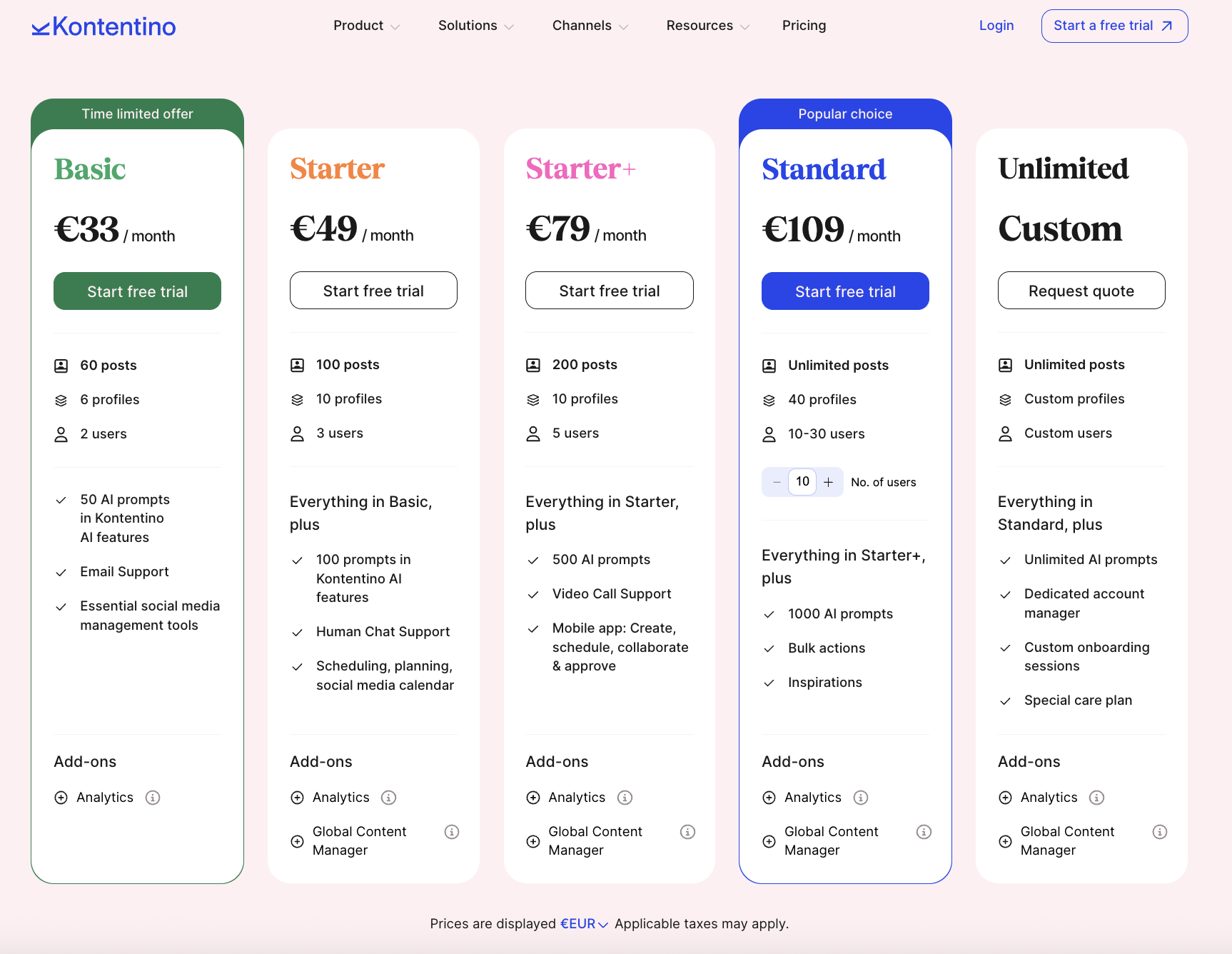
In the SaaS industry, customer value and pricing are inseparable - your pricing strategy is only as strong as your understanding of what customers truly value. For SaaS companies, adopting a value-based pricing approach is essential. This means setting price points that reflect the perceived value your product delivers to different customer segments, rather than simply basing prices on costs or competitor pricing. By focusing on customer value, SaaS businesses can enhance customer success, reduce churn, and unlock sustainable revenue growth.
Choosing the right pricing model is a critical part of this process. Popular SaaS pricing models include tiered pricing, usage-based pricing, and flat-rate pricing. A tiered pricing model offers multiple packages at different price points, each with a unique set of features, allowing customers to select the plan that best matches their needs and budget. Usage-based pricing models, on the other hand, charge customers according to their actual usage, making it easier for businesses to scale and for customers to pay only for what they use. Flat-rate pricing provides predictable costs, which can be attractive to certain customer segments seeking simplicity.
To determine the most effective pricing structure, SaaS companies must analyze customer feedback, usage data, and market dynamics. Understanding customer acquisition costs, customer lifetime value, and profit margins is crucial for supporting long-term growth and ensuring that the pricing plan aligns with business goals. Regularly reviewing competitor pricing and market positioning helps maintain a competitive advantage and ensures your value proposition remains compelling.
In B2B SaaS, the right pricing strategy not only supports expansion revenue and market share but also strengthens customer relationships by demonstrating a clear link between price and product value. By leveraging data-driven insights and a value-based approach, SaaS businesses can optimize their pricing decisions, support growth in new markets, and deliver full value to both existing and potential customers. Ultimately, aligning your pricing with customer value is the foundation for both growth and long-term success in the competitive world of software companies.
Book a free pricing consultation to discover how much revenue you're leaving on the table. We'll analyze your current pricing, identify opportunities, and show you exactly how to increase prices without losing customers.
Schedule Your Free Pricing Consultation
Results guaranteed or your time back. No sales pitch - just actionable insights you can implement immediately.


+20% upside discovered

Flawless execution = low churn

ARR lift with confidence
%20(1).png)
Maciej is a General Manager at Valueships and data-driven problem solver with strong SaaS experience who helps companies unlock higher profits and revenue growth. He leads a team of highly talented analysts who deliver valuable insights through comprehensive data analysis. He has contributed to over 100 pricing projects that have collectively unlocked tens of millions in additional monthly profit for clients. His core strengths include analytical thinking, statistics, and transforming complex data into actionable business strategies.
Schedlue a free consultation
Maciej is a General Manager at Valueships and data-driven problem solver with strong SaaS experience who helps companies unlock higher profits and revenue growth. He leads a team of highly talented analysts who deliver valuable insights through comprehensive data analysis. He has contributed to over 100 pricing projects that have collectively unlocked tens of millions in additional monthly profit for clients. His core strengths include analytical thinking, statistics, and transforming complex data into actionable business strategies.


